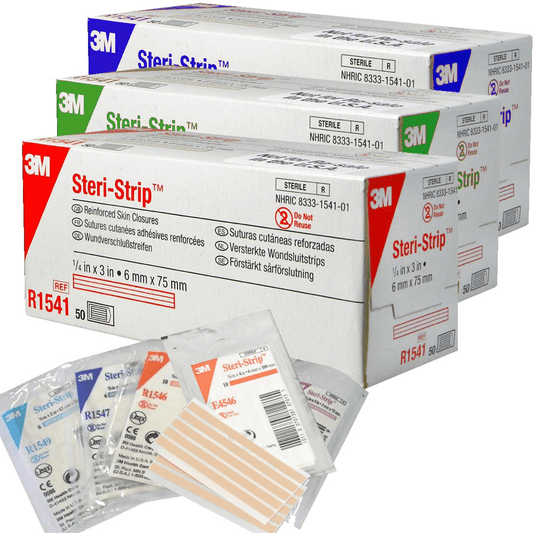
Professional Wound Closure Strips You Can Trust
Wound closure strips are essential tools in medical settings, used for closing small to medium surgical incisions, lacerations, or abrasions without the need for stitches. These strips offer a non-invasive, quick, and effective method of wound closure, providing a reliable alternative for patients who require wound closure but do not need or want sutures.
Used in hospitals, medical clinics, aged care facilities, and at-home ca... Read More
Professional Wound Closure Strips You Can Trust
Wound closure strips are essential tools in medical settings, used for closing small to medium surgical incisions, lacerations, or abrasions without the need for stitches. These strips offer a non-invasive, quick, and effective method of wound closure, providing a reliable alternative for patients who require wound closure but do not need or want sutures.
Used in hospitals, medical clinics, aged care facilities, and at-home care settings, wound closure strips help support proper wound healing by keeping the wound edges securely aligned. Their ease of use makes them ideal for both professionals and patients, ensuring that wounds are protected and remain closed to promote the body's natural healing process.
Key Benefits
-
Gentle on the Skin: Wound closure strips offer a secure yet gentle closure for wounds, reducing the need for sutures and eliminating the trauma caused by more invasive methods.
-
Improved Comfort: By creating a lightweight, flexible barrier over the wound, these strips help to reduce discomfort during the healing process. The strips are designed to move with the skin, making them ideal for use on areas that experience movement or tension.
-
Effective Infection Control: Wound closure strips protect the wound from bacteria, dirt, and contaminants, helping to minimise the risk of infection and ensuring the healing process proceeds in a clean environment.
-
Convenient Application: Easy to apply and remove, these strips offer an efficient way to close wounds, especially in areas that are difficult to stitch or where suture removal would be more traumatic.
Product Features
-
Non-Adherent Design: The strips are designed not to stick to the wound, which aids in pain-free removal and reduces the risk of disrupting the wound during dressing changes.
-
Breathable and Flexible: These strips are breathable, allowing moisture and air to circulate, promoting faster healing while also being flexible to move with the skin without causing irritation.
-
Sterile and Safe: Each strip is individually sterile and packaged to maintain the highest standards of hygiene, ensuring that it is free from contaminants until use.
-
Variety of Sizes: Available in different lengths and widths, wound closure strips can be customised to suit different wound types and sizes, providing a tailored fit for each wound.
Explore our full range of Wound Closure Strips and find a practical, reliable solution for wound care.
Read Less