Professional Medical Airway Management Equipment You Can Trust
When it comes to airway management and patient safety, having the right equipment makes all the difference. That's why we've carefully curated a selection of medical airway management tools that deliver the precision and reliability you need in critical situations.
From routine intubations to emergency airway interventions and difficult airway scenarios, our equipment suppo... Read More
Professional Medical Airway Management Equipment You Can Trust
When it comes to airway management and patient safety, having the right equipment makes all the difference. That's why we've carefully curated a selection of medical airway management tools that deliver the precision and reliability you need in critical situations.
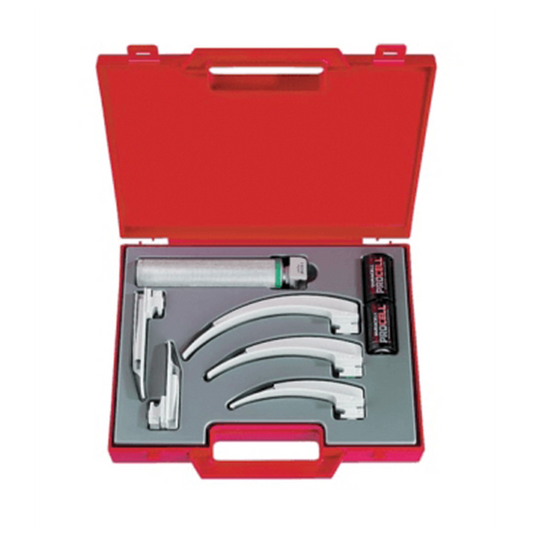
From routine intubations to emergency airway interventions and difficult airway scenarios, our equipment supports you in delivering exceptional patient care every day. Featuring medical-grade laryngoscopes, this collection delivers strong illumination and ergonomic handling to help clinicians perform airway procedures with confidence in both clinical and high-pressure environments.
Key Benefits
-
Precise Airway Visualisation: Our equipment delivers the clear airway visibility you need to confidently perform intubation procedures. You can trust these laryngoscopes to provide high-intensity LED illumination and precision optics that support accurate tube placement and safer intubation. Superior lighting and optical clarity help you identify anatomical landmarks quickly, reducing intubation time and improving first-pass success rates in critical situations.
-
Ease of Use: We know that in airway emergencies, every second counts. That's why our products feature straightforward, user-friendly designs that allow clinicians to work confidently in time-critical situations. Balanced handles and comfortable grips allow controlled movement during procedures, supporting steady technique and reducing physical strain even during challenging or prolonged intubation attempts.
-
Built to Last: Your airway equipment needs to perform reliably when lives depend on it. Designed specifically for critical care and emergency use, these laryngoscopes deliver dependable performance year after year. Constructed with durability at the forefront and engineered to withstand the rigors of emergency response, these tools maintain their functionality and reliability through thousands of critical procedures.
Product Features
-
Comfort-Focused Design: High-pressure airway procedures demand precise, controllable equipment. Our laryngoscopes feature ergonomic handles and well-balanced construction that reduce hand fatigue and support steady handling during airway management, helping you maintain control and precision throughout the procedure. Thoughtful weight distribution and grip design promote confident technique even in challenging patient positions.
-
Smart Space Solutions: Make the most of your emergency equipment inventory with our thoughtfully designed systems. Interchangeable blades in multiple sizes allow one laryngoscope system to support paediatric through to adult patients without unnecessary duplication, streamlining your equipment management and ensuring the right size is always available when needed.
-
Quality Construction: We build every piece of equipment with medical-grade materials, durable LED illumination, and precision-engineered components that ensure consistent performance in demanding clinical and emergency settings. This attention to quality delivers reliable illumination and structural integrity procedure after procedure, even in the most challenging airway management scenarios and after repeated sterilisation cycles.
Explore our full range of medical airway management equipment to find reliable solutions for your clinic, hospital, or emergency response setting.
Read Less