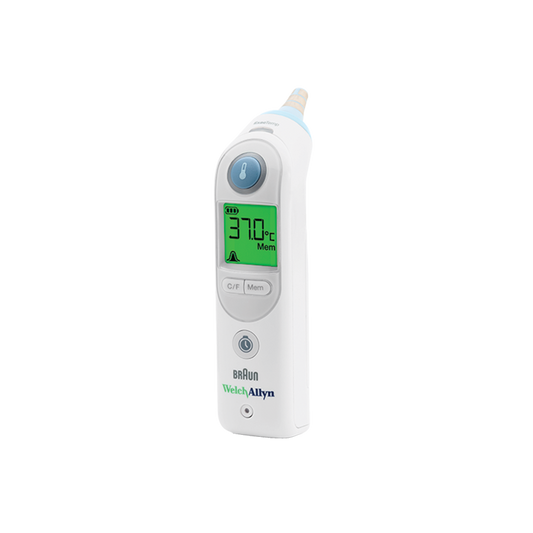
Collection: Thermometers

Fast, Accurate Readings with Our Range of Digital Medical Thermometers

Being able to quickly establish a patient’s body temperature is a crucial part of the diagnostic process. Fortunately, technology has come a long way from mercury-in-glass, and physicians are offered a number of ways to rapidly, accurately and hygienically measure human body temperature. AMA Medical Products provides a large selection of tympanic, oral/axillary and infrared thermometers for use in a variety of clinical settings.

Sanitary ear thermometers and touch-free forehead thermometers

Our range of products gives medical professionals a real choice. Many of our contact models are provided with one-touch release of probes, meaning doctors do not have to touch a used, unhygienic probe to dispose of it. Our touch-free devices are ideal for high-volume clinics where fast temperature readings are crucial. These models use an infrared beam to infer temperature from the thermal radiation emitted by a patient’s skin, and can be held at a small distance, meaning the chance of contamination of the device or infection of the physician is minimised.

With some provided with desk cradles for improved organisation, our units help your clinic take faster, more accurate temperature readings. Consider them alongside our range of diagnostic sets and stethoscopes to ensure that your most fundamental tools are contemporary and high-quality.

Order today, or contact our customer service team with any questions. Send us an email at sales@amamedicalproducts.com.au or fill in our enquiry form. You can also call us directly on +61 8 9273 3022 or toll free on 1800 626 292.

Filter and Sort

Filter and Sort

1 of 4 products

Price

The highest price is

$
$
Brand

1 of 4 products

FAQ's

A thermometer is a device used to measure body temperature. It works by detecting temperature changes in the body and converting them into a readable value. Common types include digital thermometers, infrared thermometers, and mercury thermometers, each using different methods to detect heat.
There are several types of thermometers, including digital thermometers, infrared (non-contact) thermometers, mercury thermometers, and ear (tympanic) thermometers. Digital thermometers are the most common and provide fast, accurate readings, while infrared thermometers are ideal for non-invasive, contact-free measurements.
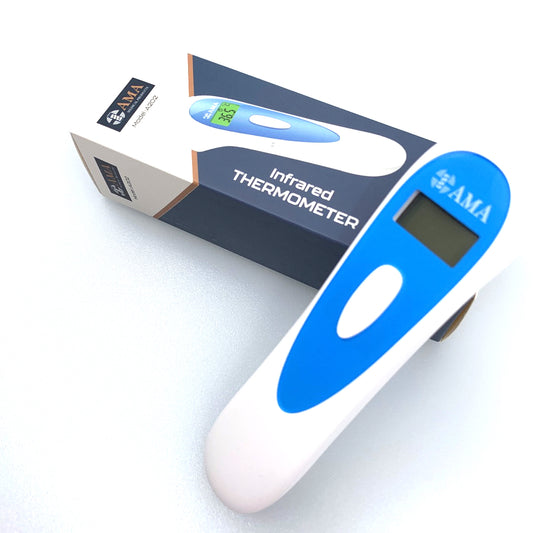
Digital thermometers are the most commonly used for measuring body temperature due to their accuracy, ease of use, and quick results. Infrared thermometers are also popular for their non-contact feature, making them ideal for use in children or for quick screenings in medical settings.
Digital thermometers are generally very accurate, providing temperature readings within ±0.1 to ±0.2°C. They are suitable for most home and clinical uses, but it’s important to follow the manufacturer’s instructions for proper use to ensure accurate readings.
To use a digital thermometer, place it under the tongue, in the armpit, or rectally, depending on the model. Ensure the thermometer is in good contact with the skin for an accurate reading. For infrared thermometers, aim the device at the forehead or ear (depending on the model), and press the button to get a reading.
A forehead thermometer uses infrared technology to measure the temperature of the temporal artery on the forehead, offering quick and non-invasive readings. An ear thermometer, also using infrared technology, measures the temperature inside the ear canal, providing accurate results, particularly in children.
Yes, infrared thermometers are safe for use on children. They are non-invasive, and their contact-free nature makes them ideal for quickly taking a child’s temperature without causing discomfort. Just ensure the device is used correctly, as improper positioning can lead to inaccurate readings.
Digital and infrared thermometers should be cleaned with a soft cloth or disinfectant wipe after each use. Avoid using harsh chemicals or submerging thermometers in water (unless the device is waterproof). For thermometers with removable probes, follow the manufacturer’s cleaning instructions to ensure hygiene and accurate performance.
Most thermometers measure a temperature range from approximately 32°C (89.6°F) to 42°C (107.6°F), which is suitable for measuring human body temperature. Some thermometers may have slightly different ranges depending on the type, but these cover the standard temperature for healthy adults and children.
Thermometers typically last several years with proper care. However, if your thermometer becomes damaged, shows inconsistent readings, or if it’s a mercury thermometer (which should be replaced due to safety concerns), it’s best to replace it. Digital thermometers may require new batteries after a period of use.
Rectal temperatures are generally considered the most accurate for infants and young children. Oral temperatures are accurate for adults, while underarm measurements tend to be less precise. Infrared thermometers provide a good non-contact option, especially for quick screenings or in medical settings.
A fever is typically defined as a body temperature over 38°C (100.4°F). While fever is a common response to infections, if the temperature exceeds 40°C (104°F), persists for several days, or is accompanied by other severe symptoms, it’s important to seek medical attention immediately.
Temperature variations can occur due to differences in measurement techniques, such as the placement of the thermometer, the type of thermometer used, or environmental factors like room temperature. Always follow the instructions for the specific thermometer to ensure accurate results.
While most thermometers are designed specifically for body temperature, some can also be used for measuring the temperature of liquids (like water or food) or the environment. However, it’s important to check the thermometer’s specifications to see if it’s suitable for such uses.
Non-contact infrared thermometers are beneficial for quick, hygienic temperature measurements without direct contact. They are particularly useful in public health settings or for patients who are uneasy about traditional thermometers. These devices are fast, easy to use, and ideal for taking temperatures from a distance.
Yes, thermometers are useful for monitoring temperature changes in conditions such as thyroid disorders, infections, or during periods of illness. Regularly tracking temperature can provide valuable insights into disease progression and help healthcare providers make informed treatment decisions.
To ensure your thermometer is working properly, regularly check its calibration by comparing its reading with other reliable thermometers. If you notice inconsistencies or the thermometer shows abnormally high or low temperatures, it may need recalibration or replacement.
Yes, there are thermometers specifically designed for infants and children. These typically have smaller, flexible probes or infrared technology to make taking a child’s temperature easier and more comfortable. Some also have features such as fever alarms and large, easy-to-read displays for parents.
For newborns or infants, rectal thermometers are the most accurate method for measuring temperature. Use a digital thermometer designed for infants with a flexible tip and apply a small amount of lubricant for ease of insertion. Always follow the manufacturer's guidelines and clean the thermometer thoroughly after each use.
To prevent cross-contamination, always clean the thermometer after each use, especially if it is shared between multiple individuals. Use disposable covers or probes when available, and ensure that reusable thermometers are sanitized properly. Store thermometers in a clean, dry place to maintain hygiene.