Collection: Scales

Filter and Sort

Filter and Sort

5 of 20 products

Price

The highest price is

$
$
Brand

5 of 20 products

FAQ's

Medical scales come in various types, including digital scales, mechanical scales, BMI scales, and wheelchair scales. Each type is designed to meet different needs, such as accurate weight measurement, body composition analysis, and accessibility for patients with mobility issues.
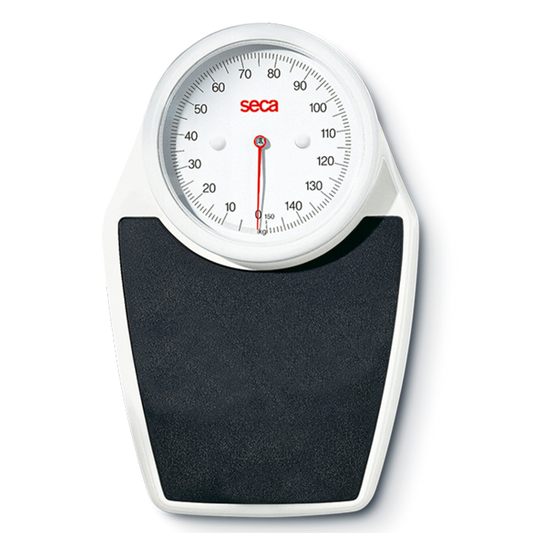
Choosing the right scale depends on factors such as patient type, the level of accuracy required, weight capacity, and whether you need additional features like BMI calculation or body fat percentage analysis. Consider ease of use, durability, and whether the scale is portable or fixed.
A BMI (Body Mass Index) scale calculates a person’s BMI by measuring weight and height. It provides an estimate of whether an individual is underweight, normal weight, overweight, or obese based on their BMI score, which helps assess health risks related to weight.
Yes, digital scales generally offer more accurate readings than mechanical scales, as they use electronic sensors to provide precise weight measurements. They also tend to have additional features such as memory storage, BMI calculations, and easy-to-read digital displays.
Many digital scales come equipped with body composition analysis features, which can measure body fat percentage, muscle mass, and other metrics. These scales use bioelectrical impedance analysis (BIA) to estimate body fat based on weight and resistance.
The weight capacity of a scale depends on the needs of your patients. For general use, most scales can support up to 150 kg (330 lbs), but bariatric scales are available with higher weight capacities, often up to 300 kg (660 lbs) or more, to accommodate patients with higher body weights.
Medical scales, particularly digital models, are highly accurate, often with an error margin of 0.1 kg to 0.2 kg. However, factors like the surface the scale is placed on and patient movement can affect accuracy. It's important to use scales on a flat, stable surface for the best results.
Yes, medical-grade scales are designed for use in healthcare settings. They are built to be durable, easy to use, and offer high levels of accuracy to support patient health monitoring. Some models are designed for specific uses like bariatrics or paediatrics.
To maintain your scale, regularly clean it with a soft cloth and avoid harsh cleaning agents. Calibrate your scale periodically, especially if it’s being used in a clinical or hospital environment, to ensure it remains accurate. Calibration should be done according to the manufacturer’s instructions.
Many digital scales come with memory storage that allows users to track their weight over time. This feature helps monitor progress towards weight loss or gain goals and can provide detailed insights into weight trends.
Medical scales are designed for accuracy, durability, and features that support healthcare professionals' needs, such as higher weight capacities and body composition measurements. Personal use scales, on the other hand, are more focused on everyday weight tracking for individuals at home.
Body composition scales use bioelectrical impedance analysis (BIA) to estimate various metrics, such as body fat percentage, muscle mass, and water content, by passing a small electrical current through the body. The resistance to the current helps calculate these values based on weight.
Wheelchair scales are designed to accommodate patients who are unable to stand, allowing them to remain in their wheelchair while being weighed. These scales ensure accurate weight measurements for individuals with mobility impairments, providing a more convenient and accurate solution for healthcare providers.
Yes, scales designed for children or infants can help monitor growth and development. Paediatric scales are specially calibrated to track the weight of younger patients and often have features to ensure that readings are accurate for small children.
Regular weight measurement helps healthcare providers monitor a patient’s overall health, detect early signs of obesity, malnutrition, or fluid retention, and assess the effectiveness of treatments for conditions like heart disease, diabetes, and kidney failure.
Yes, regular weight tracking can be an important part of managing chronic conditions. For example, weight gain or loss can be an indicator of complications in patients with diabetes or heart disease, helping doctors make timely adjustments to treatment plans.
A scale with memory function allows users to store multiple measurements, enabling healthcare providers or individuals to track changes in weight over time. This feature is especially helpful for patients undergoing treatment or weight management programs.
Yes, some digital scales can connect to mobile apps or health monitoring systems via Bluetooth or Wi-Fi. These scales automatically sync weight data with health apps, helping users track their health metrics in real-time and make informed decisions about their health.
When choosing a scale for bariatric patients, look for models with high weight capacities (up to 300 kg or more), sturdy construction, and features like wide platforms or wheelchair accessibility. These scales provide accurate readings and comfort for patients with higher body weights.
Clinical-grade scales are designed to be highly accurate, durable, and easy to use. Key features often include large displays, high weight capacities, memory storage, the ability to measure BMI or body composition, and a sturdy design to withstand frequent use in a healthcare environment.